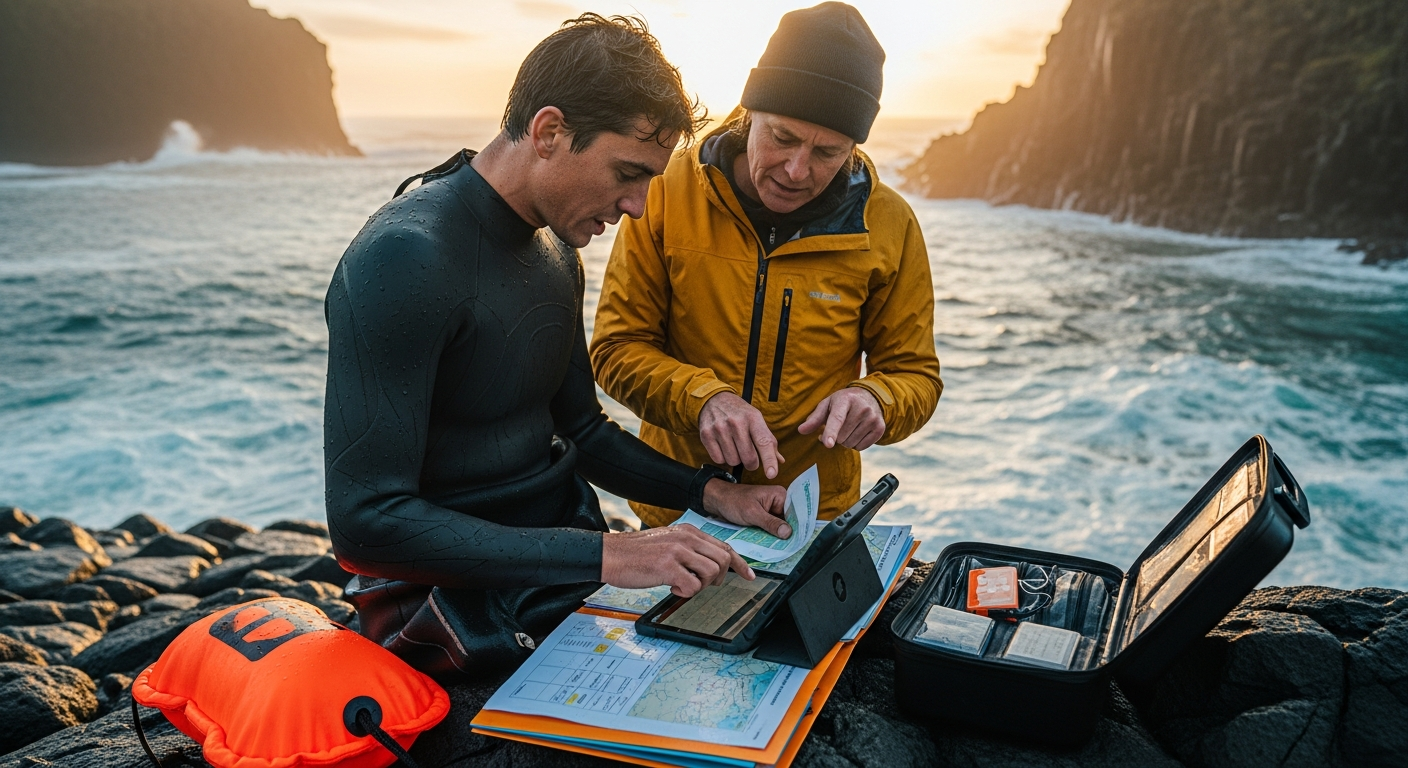
Open water swimmers tend to obsess over the right details: currents, visibility, weather windows, and daily fueling routines. What most athletes skip—or intentionally ignore—is the very real possibility that a routine swim trip could spiral into a serious medical event. When injuries happen away from home, narrow provider networks and complicated logistics can drain personal finances fast.
Getting prompt medical attention turns into a logistical puzzle when you are training miles from the nearest hospital or urgent care clinic. In the U.S., maritime search and rescue operations are a primary mission of the United States Coast Guard (USCG). However, swimmers training in remote coastal waters must realize that Coast Guard helicopter crews are optimized for challenging aquatic rescues and immediate stabilization, rather than functioning as a long-term specialized ICU unit. A rescue from the water is only the first step; significant transit delays can still occur before you reach definitive hospital care. Understanding these localized logistical risks early is essential to securing the right insurance coverage and avoiding heavy medical debt.
Why Open Water Swim Trips Create a Different Risk Profile
Remote Conditions Change the Medical Response Window
Open water swimming regularly takes place far from any primary care physician, often in regions where access to coastal trauma centers is limited. When coordinating formal events, guidelines from the United States Lifesaving Association (USLA) recommend that evacuation from the water to land-based emergency medical services (EMS) be completed within 10 minutes. In remote locations, however, getting to shore is only half the battle. Long land-transfer times can delay critical treatment for everything from boat ramp fractures and severe jellyfish envenomation to sudden cardiac events.
Severe physiological reactions, such as cold water shock, remain a persistent threat, even for highly capable swimmers. Official safety warnings from the National Weather Service (NWS) highlight that sudden immersion in water below 60°F (15°C) triggers an involuntary gasp reflex, rapid hyperventilation, and dangerous spikes in heart rate and blood pressure. Swimmers need contingency plans that cover both acute water emergencies and the more mundane land-based training injuries.
Environmental factors like extreme heat and prolonged sun exposure further complicate the medical response timeline. The CDC explicitly warns that athletes exercising in hot, humid weather face a heightened risk of rapid dehydration and heat-related illnesses, which can quickly escalate from muscle cramps to full-blown heat stroke if left unchecked. Relying solely on local volunteer rescue operations is a flawed strategy when rural clinic resources are already stretched thin.
Travel Turns a Routine Injury into a Financial Event
An injury at your local pool might mean a straightforward copay. Sustaining that same injury out of state, though, generates unexpected financial friction.
The Federal Safeguard: The federal No Surprises Act protects consumers from unexpected balance billing for emergency room visits and out-of-network air ambulances. If a domestic helicopter ambulance extraction is required, private health insurance plans must cover it at in-network cost-sharing rates.
However, major financial gaps remain. The No Surprises Act does not apply to ground ambulances, which can still bill you out-of-network. Furthermore, domestic health networks regularly impose strict rules, high deductibles, and localized cost-sharing tiers for non-emergency follow-up care, specialized imaging (such as MRIs), or physical therapy located outside your primary geographic residency zone.
Sustaining an injury that cuts a trip short can also leave your savings suddenly depleted due to non-refundable expenses. Trip interruption insurance protects athletes from these unforeseen logistical costs. If a swimmer breaks a bone on day one of a planned two-week training camp, trip interruption benefits help recover prepaid lodging and travel costs. Swimmers attending long-distance camps or coastal races need to account for these specific financial vulnerabilities in their travel budgets.
The Five-Step Coverage Review Before You Leave
Before you zip up your travel bag, run through each of these five steps to ensure your health insurance and emergency plans protect you while traveling:
Step 1: Review Baseline Medical Needs and Known Triggers
Every solid trip plan starts with a thorough inventory of prescription medications and known physiological triggers. A swimmer with exercise-induced asthma, for example, needs a clear plan for accessing local pharmacies, as strenuous exertion and rapid environmental shifts can quickly cause airway constriction. Categorize potential medical issues by urgency: know what requires an immediate ER visit versus what can be managed at a local urgent care clinic.
Step 2: Identify Coverage Blackouts in Your Primary Health Plan
Check where your primary health insurance stops working as expected. Many travelers discover too late that their domestic plans do not cover out-of-network urgent care clinics when crossing state lines. Narrow provider networks and out-of-state restrictions can create major financial liabilities that you won’t discover until you are seeking care.
If you suffer an injury requiring specialized imaging, high emergency room copays and preauthorization hurdles may kick in immediately. This is particularly true for those relying on regional HMO (Health Maintenance Organization) networks, which rarely cover non-emergency care outside their home region. Furthermore, if you are covered under state-specific programs like Medicaid, you must account for strict out-of-state coverage limitations, which typically restrict out-of-state care strictly to life-threatening emergencies.
To mitigate these risks, verify whether your provider permits telehealth consultations across state lines to authorize local prescriptions under current interstate telehealth regulations. Also, confirm whether subsequent physical therapy and rehabilitation will be approved once you are back home from your trip.
Step 3: Confirm Evacuation and Transportation Benefits
Verify ground transport benefits, medical evacuation, and trip interruption limits. While a life-threatening air ambulance flight is protected under the No Surprises Act, non-emergency medical transfers—such as a medically supervised flight back home to your local hospital—are rarely covered by domestic health insurers. If you want the option to be transported closer to home for long-term recovery without paying tens of thousands out of pocket, you will need a supplemental medical transport membership.
Step 4: Review Auto-Related Medical Coverage Before a Swim Trip
Many destination training blocks involve pre-dawn drives to reach optimal beaches, lakes, or marinas. Traveling on unfamiliar roads while fatigued from a red-eye flight or an intense training session sharply increases the risk of a collision. According to the NSC, car accidents represent a leading cause of preventable trauma injuries, making adequate rental and auto-medical insurance essential.
Destinations like Florida attract thousands of open water swimmers annually, bringing heavy traffic to coastal highways. Compiled Florida crash demographic data indicates that non-residents account for a notable share (roughly 8% to 9%) of serious and fatal injuries in impaired driving crashes. If you are driving or renting a car in the Sunshine State, take the time to understand how Personal Injury Protection insurance while traveling applies after a crash.
Florida maintains unique automotive insurance mandates that directly affect any visiting swimmer injured in a road accident:
- The 14-Day Rule: Under Florida Statute § 627.736(1)(a), initial medical treatment must occur within 14 days of an accident to preserve your PIP benefits. Waiting to see if crash-related soreness “walks itself off” can entirely disqualify you from coverage.
- The Medical Cap: Highly conditioned athletes frequently dismiss post-crash stiffness as typical training fatigue or wetsuit strain. However, without a qualified medical professional’s formal determination of an Emergency Medical Condition (EMC), Florida PIP medical benefits are statutorily capped at $2,500 rather than the full $10,000 limit.
Prompt medical attention secures the clinical documentation you need to maximize available coverage and support a complete physical recovery.
Step 5: Prepare a Treatment and Documentation Protocol
Having a written emergency protocol dramatically reduces decision friction during a crisis. Save your primary insurer’s phone numbers and download digital ID cards directly to your smartphone for immediate access to policy details. Identify the nearest urgent care center, 24-hour pharmacy, and local hospital trauma unit before you arrive.
Operational awareness also means understanding the specific safety resources available at your chosen venue. Identify local lifeguard schedules, emergency access points, and context for regional rescue teams. If an accident occurs on the road or water, log exact incident times, track symptoms, and preserve every medical receipt, medical record, and police report. You will need this rigorous documentation to seek seamless reimbursement once you return home.
Pre-Trip Coverage Summary Checklist
Use this quick reference table to confirm that every aspect of your physical and financial health is accounted for before boarding your flight or hitting the road:
| Coverage Area | What to Check Before the Trip | Why It Matters for Swimmers |
| Primary Health Insurance | In-network urgent cares, out-of-state rules, deductibles | Out-of-state emergency care is protected by the No Surprises Act, but regional follow-ups and routine urgent care visits are subject to network restrictions. |
| Ground Ambulance Coverage | Deductibles, out-of-network balance billing terms | Ground ambulances are exempt from the No Surprises Act; supplemental travel insurance can buffer unexpected ground transport bills. |
| Supplemental/Travel Insurance | Trip interruption, non-medical cancellations, out-of-state gaps | Recovers non-refundable training camp fees, lodging, and airfare if an injury forces an early departure. |
| Auto Medical Coverage | Rental car insurance, out-of-state PIP/MedPay terms | Essential for early-morning commutes to remote swim sites; dictates coverage timelines and medical caps (such as Florida’s 14-day rule). |
| Rehabilitation Coverage | Out-of-state PT limits, home-state referral requirements | Ensures that continuing care for a training injury (like a severe rotator cuff strain) is fully covered once you return home. |
A Strong Swim Plan Includes a Coverage Plan
The most disciplined open water swimmers pour immense mental energy into analyzing currents, route safety, and nutritional strategies. But true athletic preparedness also means applying that same focus to potential medical and legal liabilities. Recent international medical extraction events show why ignoring worst-case travel scenarios simply isn’t worth the gamble. Physical protection relies on active injury prevention, rapid clinical intervention, and sustained professional rehabilitation support. Financial protection depends on usable insurance, adherence to statutory benefit timelines, and thorough documentation of every expense.
So far in this guide, you’ve covered medical planning, insurance gaps, transportation risks, and the documentation protocol. Navigating unexpected injuries out of state doesn’t have to result in devastating personal debt or delayed healing. Athletes who anticipate out-of-network costs and lock down necessary medical transport limit travel with noticeably greater confidence. Travel insurance options continue to expand, offering broader safety options for longer-duration trips. Taking the time to understand specific regional auto insurance mandates keeps those morning commutes to the water financially secure. Before your next camp, race, or destination training block, review your coverage with the same discipline you bring to tide charts, fueling, and route planning.
 is a seasoned fitness expert with a special focus on swimming and holistic health strategies. With years of experience as a competitive swimmer and fitness coach, Patricia offers readers a wealth of knowledge on optimizing performance and maintaining a balanced lifestyle. Her writing on Swim Fast Stay Fit reflects her commitment to empowering others with practical advice and motivational insights. Patricia’s approach integrates advanced training techniques with accessible wellness tips, aiming to help individuals achieve their personal fitness goals and enhance their overall quality of life. Through her engaging articles, Patricia inspires readers to embrace a comprehensive approach to health, combining effective exercise routines with mindful nutrition and self-care practices.