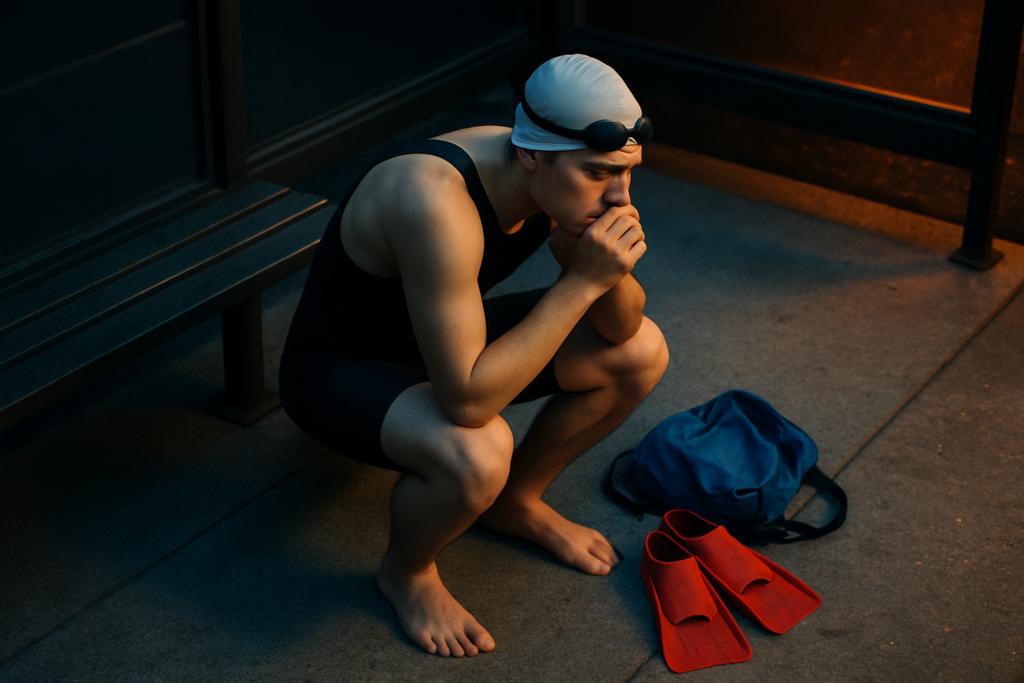
What Performance Anxiety Feels Like in the Water
Performance anxiety is more than just a few nerves it’s a physical and mental response that can derail even the most prepared swimmer. Understanding the symptoms and when they tend to show up is the first step to regaining control.
Common Physical and Mental Signs
When anxiety strikes in the water, it often shows up in noticeable (and frustrating) ways:
A tight or heavy feeling in the chest
Shaky arms or legs, especially during warm up sets
Racing thoughts or a brain that suddenly goes blank
Trouble focusing on technique or race plan
These sensations are the body’s way of reacting to stress, even if the stress is about something you do regularly like swim.
When It Tends to Show Up
You can be flying through taper, feel confident in your training, and still hit a wall mentally before a race. Why?
During warmups: The stakes start to feel real, and your body begins comparing how you feel today to past performances.
Behind the blocks: Adrenaline surges. Other swimmers look fast. Doubts creep in.
Right before the whistle: Your mind gets loud. Your breath shortens. Your focus scatters.
These are high pressure moments, and many swimmers experience a similar internal storm during them.
You’re Not the Only One
Even elite athletes who have been competing for years face performance anxiety. The difference is, they’ve learned how to work with it not against it.
Performance anxiety is common across all levels of swimmers, from youth club to Olympic finals
It doesn’t reflect your ability or preparation it’s just part of the racing experience
Recognizing it is the first step toward managing it
Before you can swim smart, you need to make peace with the fact that nerves happen. With the right strategies covered in the next sections you can turn them into fuel.
Understand the Biology to Beat It
Your brain doesn’t know the difference between a swim meet and a genuine life or death situation. Same lights, same rush, same nerves. From an evolutionary standpoint, competition triggers the same survival circuit as danger: the amygdala lights up, stress hormones flood in, and your body shifts into fight or flight mode. That’s why your heart races before the buzzer, your stomach drops, and your muscles tighten.
The problem? This response was designed for running from predators not executing precise technical strokes. When adrenaline hijacks your system, fine motor skills can slip, breath control stutters, and that carefully rehearsed start vanishes under pressure.
The good news: your nervous system is trainable. Regular exposure to pressure simulated race conditions, time trials, visualization can help your brain learn the difference between threat and challenge. Over time, this rewiring builds resilience. Instead of panic, you get presence. And that’s the mental edge every swimmer needs when one hundredth of a second matters.
You don’t need to erase anxiety. You need to teach your body how to handle the signal and keep swimming through it.
Mental Skills That Actually Work
When the nerves hit, you don’t need more hype you need control. That’s where mental skills come in. Practical, repeatable, and battle tested by elite swimmers.
Start with controlled breathing. It’s simple, not soft. Box breathing four seconds in, four hold, four out, four hold levels your nervous system without any drama. The 4 7 8 method goes deeper: inhale for 4, hold for 7, exhale for 8. Feels weird at first, but it slows your heart, clears the fog, and sharpens your edge.
Then there’s visualization. Not just daydreaming actually walking through your race in your head. From the dive to your last stroke, crisp and focused. Feel the water, time your pace, see success. This isn’t wishful thinking. It’s mental reps, low cost, high return.
Finally, rituals. The predictable, personal things you do before every race to pull yourself into the moment. Could be taping your goggles the same way, shaking out your arms, even reciting the same phrase. Not about superstition. It’s about signal: time to compete. Get grounded. Get ready.
Used right, these tools turn panic into power. They won’t eliminate anxiety but they’ll keep it in check.
Train Like You Compete

Performance anxiety doesn’t vanish, but it gets smaller the more it meets routine. When your brain has seen the situation before same suit, same sounds, same heart rate it stops calling for backup. Repetition teaches your nervous system that pressure isn’t danger. It’s just another rep.
That’s why your best training isn’t always about physical effort. It’s about how closely practice mirrors race day. Put yourself through the same cues: pacing, warm up routine, maybe even a mock whistle start. Get used to running through your mental checklist under pressure, not in peace.
And don’t skip the mental “warm up.” Visualization, breathing control, even soundtracking with your pre race playlist whatever puts your head in a steady place. When you treat that mental prep like your goggles or cap non negotiable you build a habit of readiness. Do it enough, and you won’t just be prepared. You’ll be automatic.
Building Confidence Over Time
Confidence in the water doesn’t show up overnight. It’s earned slowly through reps, resilience, and the small wins that stack into something solid. Track your progress, even when it feels minor. One less false start. A smoother flip turn. Trust builds when you can see where you’ve been and where you’re headed.
Celebrating those small victories is fuel. Don’t wait for a gold medal to acknowledge you’re getting better. A faster split or showing up on a tough day are wins, too. Progress isn’t always loud. Often, it’s quiet and persistent.
Who you train with matters just as much as how you train. Surround yourself with teammates and coaches who lift you, not drain you. You want people who remind you why you swim and know how to recalibrate you when nerves creep in.
And speaking of nerves: they’re not always the enemy. Learn how to parse the difference. Butterflies don’t always mean you’re unprepared sometimes, they mean you care. Readiness isn’t the absence of nerves it’s the ability to perform with them in the room.
Learn from Those Who’ve Been There
Mental Hacks from Veteran Swimmers
Elite and experienced swimmers have something in common: they’ve all faced performance anxiety and found ways to push through it. Here are a few time tested strategies they return to when nerves start creeping in:
Mantra Repetition: Quietly repeating a phrase like “strong and smooth” or “I’ve done the work” can block intrusive thoughts.
Mental Snapbacks: Mentally snapping yourself out of panic by focusing on one cue like a streamline or breakout keeps your brain engaged.
Routine Consistency: Sticking to the same pre race actions (right down to putting on the cap or adjusting goggles a certain way) can create a calm sense of control.
Myths About Mental Strength Debunked
Many swimmers get stuck trying to “tough it out” mentally. The truth? Strength doesn’t always look how you expect. Let’s set the record straight:
Myth 1: “If I’m anxious, I’m not mentally strong.”
Reality: Anxiety is a natural response it signals you care. Mental strength means knowing how to manage it.
Myth 2: “Visualization is only for elite athletes.”
Reality: Every level of swimmer can use visualization it works because your brain responds to imagined experiences almost like real ones.
Myth 3: “Confidence should always feel like calm.”
Reality: Confidence might still come with nerves. The difference? You swim through them.
Real Stories, Real Growth
If you’re struggling with swim anxiety, you’re not alone and there are countless success stories to prove it. Swimmers from all levels have opened up about overcoming mental struggles and bouncing back stronger.
You can read several of those powerful stories and strategies here: overcoming swim anxiety. These lived experiences remind us: anxiety might join us in the lane, but it doesn’t have to drive the race.
Put It All Together
After understanding the roots of performance anxiety and learning skills to manage it, the final piece is creating a personalized plan you can rely on. This isn’t about a quick fix it’s about building a routine that brings confidence to every meet.
Create Your Own Pre Race Anxiety Toolkit
No two swimmers are the same, so your anxiety management tools should reflect what works best for you. Start by assembling a mental kit you can fall back on when nerves rise.
Consider including:
A breathing technique you can do on the blocks (like 4 7 8 or box breathing)
A short mental script or mantra that keeps you focused
Headphones and a playlist to block out the noise
A physical warm up you practice consistently at meets
A checklist to run through before each race to keep you grounded
Train Your Mind Like Your Body
Mental fitness requires the same commitment and conditioning as physical strength. Just like you build endurance and technique through regular practice, your mindset needs repetition and structure.
Set aside time during training to practice focus and visualization
Debrief after your races to reflect on your emotional state and growth
Don’t wait for a meet to mentally rehearse train your mindset daily
A Final Word: Anxiety Is a Signal Not a Sentence
Performance anxiety doesn’t mean you’re broken or unprepared. It’s a natural response that can act as a cue to reset, not retreat. With awareness and consistent effort, you can turn anxiety into action.
Remember:
Everyone feels nervous what matters is how you respond
Confidence comes from doing the work, not wishing it away
Mental strength is built over time, not overnight
For more in depth tips and real world strategies, check out this guide on overcoming swim anxiety.
 is a dedicated fitness enthusiast with a deep-seated passion for swimming and holistic health. Leveraging her extensive background in competitive swimming and personal training, she provides readers with expert advice on optimizing their workouts and enhancing their overall well-being. Kiara's writing stands out for its blend of motivation and practical tips, making complex fitness concepts accessible and actionable. She is committed to helping individuals of all levels reach their fitness goals by promoting a balanced approach to exercise and nutrition. In her articles on Swim Fast Stay Fit, Kiara shares her personal experiences, training techniques, and strategies for overcoming common fitness challenges, inspiring others to lead healthier and more active lives.